A Pattern with a Past
With its distinctive broken checks and unmistakable black-and-white design, houndstooth has been worn by everyone from Scottish shepherds to royalty, fashion editors, and runway models. Not bad for a pattern that looks a little like a collection of tiny, organized teeth.
How did this traditional textile become one of fashion’s most recognizable prints? And why, after all these years, are we still wearing it?
From the Scottish Highlands to High Fashion
Long before houndstooth appeared on designer runways or in the pages of Vogue, it was a practical pattern associated with traditional woven woolens. And when I say long before, I mean long before.
Unlike the colorful tartans that eventually became associated with Scottish clans, houndstooth was a relatively uncomplicated design, traditionally woven using contrasting light and dark wool. It was practical, durable, and probably not something anyone gave much thought to beyond keeping warm.
Named for…you guessed…the shape of the hounds tooth, the jagged, four-pointed checks, supposedly resemble a dog’s tooth. The French call it pied-de-poule, meaning chicken’s foot, which isn’t particularly glamorous either.
While its name is rather simple the way this fabric has been used over the years is not. Over time, the pattern moved beyond its countryside beginnings and found its way into sophisticated tailoring, coats, dresses, and accessories.
And then the designers got involved.
From Country Cloth to Couture
By the early twentieth century, houndstooth had begun moving beyond its countryside roots and into fashionable wardrobes, particularly in men’s tailoring.
During the 1930s, the pattern appeared in sophisticated suits and became associated with British-inspired style. Its popularity among fashionable men helped transform what had once been a practical wool pattern into something considerably more refined.
And it wasn’t long before women’s fashion took notice.
By the 1940s and 1950s, designers were incorporating houndstooth into beautifully tailored jackets, skirts, coats, and dresses. The bold contrast of the pattern worked particularly well with the structured silhouettes of the era, giving traditional tailoring a graphic, modern edge.
Christian Dior was no stranger to houndstooth. His revolutionary New Look of 1947 introduced the world to sharply defined waists and beautifully structured silhouettes, most famously the Bar jacket. The house has since reimagined that iconic design in black-and-white houndstooth, proving that a classic pattern and a little French tailoring are a pretty unbeatable combination.
Meanwhile, Coco Chanel was busy transforming traditional menswear fabrics into something entirely different. Her signature tweed suit, introduced in 1956, paired a simple jacket with a coordinating skirt and became one of fashion’s most enduring looks. While Chanel is more closely associated with tweed than houndstooth specifically, her use of textured wool fabrics helped establish the polished, menswear-inspired style we still associate with classic checks today.
Quite a transformation for a pattern that started out keeping shepherds warm.
Today, houndstooth appears in just about everything imaginable, from traditional wool coats and tailored suits to handbags, shoes, dresses, and even home furnishings. It can be tiny and understated or oversized and impossible to ignore.
Not bad for a pattern that’s been around for centuries.
Why Houndstooth Still Works
Part of houndstooth’s appeal is its versatility. In small black-and-white checks, it feels timeless and tailored. Make the pattern oversized or introduce unexpected colors, and suddenly it’s something far more contemporary.
It also happens to work beautifully with simple pieces already hanging in most closets. Black boots, a leather jacket, a great coat, or even a bright red accessory can completely change the mood.
And unlike some trends that demand an entirely new wardrobe, houndstooth has a way of fitting right in with what you already own.
A Little Houndstooth of My Own
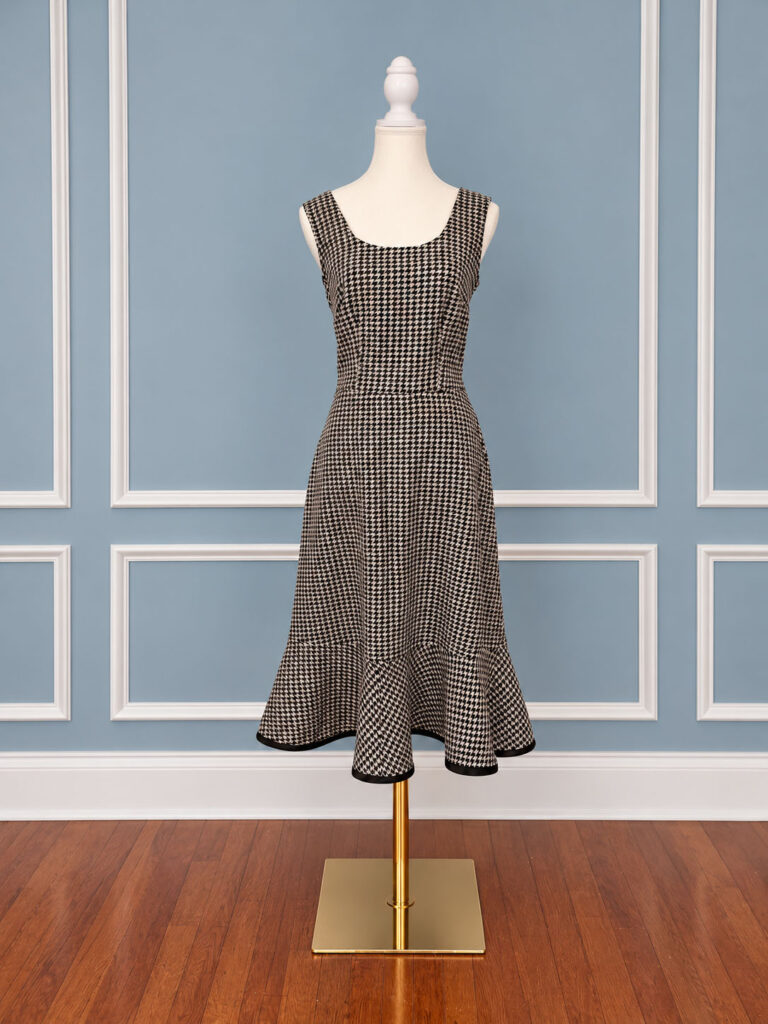
I initially had a mini dress with cap sleeves in mind for this fabric. Clearly that idea went out the window. Since the pattern of the fabric leans to classic I wanted a design that communicated that idea, incorporate a little something more. The dress with it’s scoop neck line and a line skirt keep the design simple but throw in a flounce and the dress says lets kick things up a notch.
The houndstooth provides the classic element, while the flounce keeps things interesting. It’s a balance between the two.
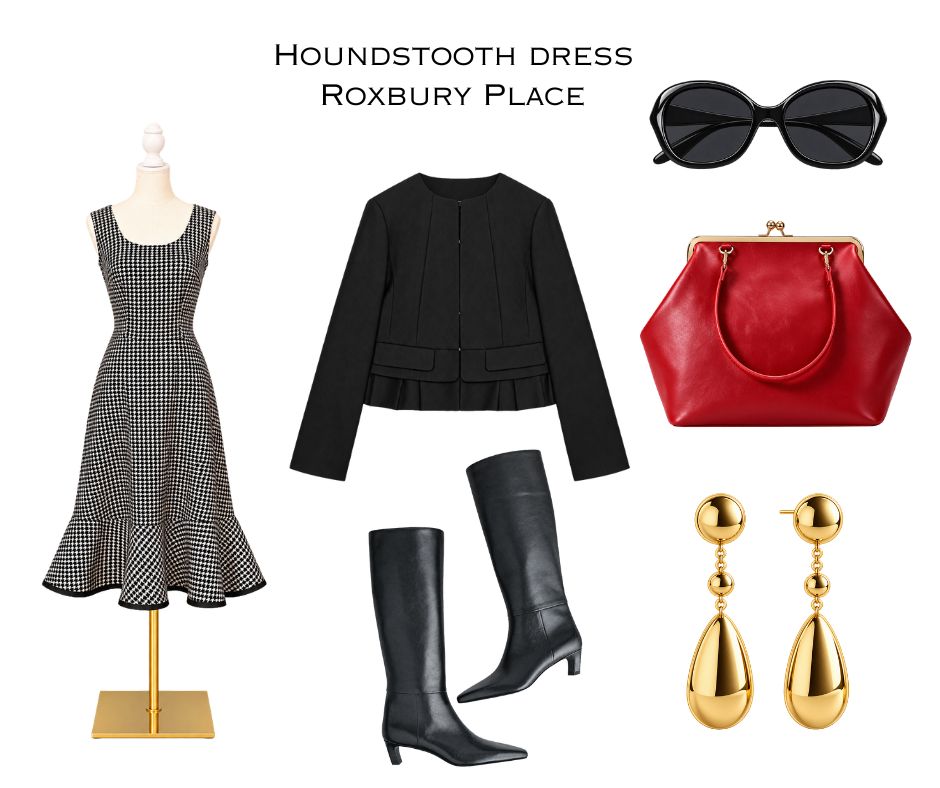
And while I love how the dress looks on its own, I’m already picturing it with black leather boots or a cropped jacket, and a bright colored bag. A little edge never hurt a classic.
how to style
Houndstooth inspiration
This isn’t my first houndstooth rodeo. Check out my other houndstooth project
Some Things Never Go Out of Style
Fashion has a habit of announcing that something is back, even when it never really went anywhere.
Houndstooth is one of those patterns.
It’s been around for generations, survived countless fashion trends, and found its way into everything from traditional wool coats to avant-garde runway collections.
My version may not be headed to a royal engagement or Paris Fashion Week, but it does have something in common with the famous looks that came before it: a classic pattern with enough personality to make it interesting.
And really, isn’t that what personal style is all about?

